- Home
- News & Trends
- Ninja vs NutriBullet: which blender is best for you?
❚ We’ve picked products we think you’ll love and may earn commission from links on this page. Read about why you can trust Good Food reviews.
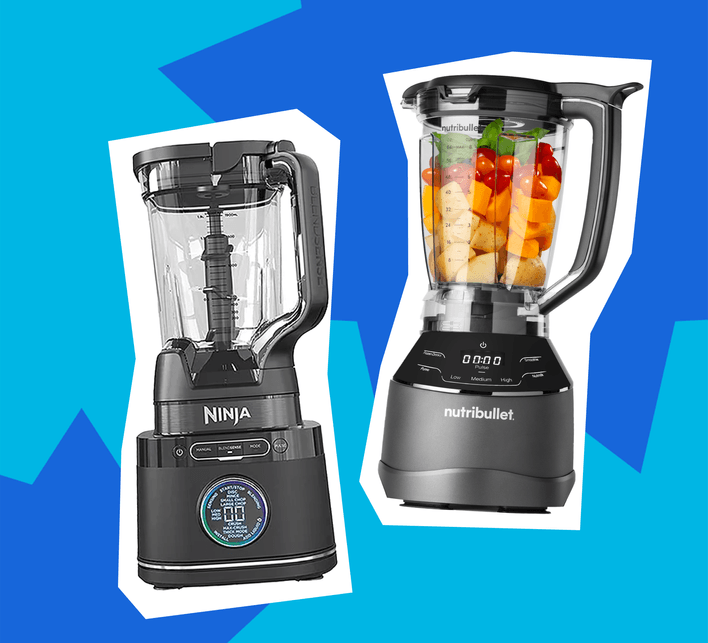
Ninja vs NutriBullet: which blender is best for you?
- Gabrielle Sander - food writer and reviews expert
Published: November 24, 2026 at 3:16 PM
loading...
Try the Good Food app - subscribe today
Ninja and NutriBullet are two of the leading blender brands and both have performed consistently well in Good Food tests. With many shared traits and models to choose from, which one should you buy?
Ninja and Nutribullet are among the leading brands in a global blender market that is forecast to be worth around $5.5 billion by 2034. Both brands are US-based, launched their blender ranges around the same time (between 2009 and 2012) and have built their reputations on making food and drink preparation quicker, easier and more convenient.
Ad
Fast forward to today and these brands are frequently compared alongside each other on social media – “Ninja vs Nutribullet” – as content creators and everyday consumers alike try to unpick the differences and determine which brand is best.
While they may look similar at first glance, Good Food tests show they differ in important ways. We have put blenders of all shapes and sizes through their paces in the Good Food test kitchen, using our triple-tested recipes and everyday scenarios, to help us accurately determine the best performers.
We’ve looked at everything from price and performance, functionality and features, plus those all-important end results, so whether you’re whipping up a fruit smoothie, family-sized soup, post-workout protein shake or strawberry daiquiri for two, we can confidently guide you towards the best NutriBullet or Ninja model for you.
Jump to section:
- Ninja vs NutriBullet blenders
- Ninja vs NutriBullet compared
- Is Ninja better than NutriBullet?
- How we test blenders
Ninja vs NutriBullet blenders: how do the brands differ and what are they best known for?
Ninja
The Ninja brand launched in 2009 as part of Euro-Pro Operating LLC, founded in 1994 by Canadian entrepreneur Mark Rosenzweig. The company built its reputation on challenging established appliance brands, offering consumers comparable or better performance and functionality at more accessible prices. Its approach centred on identifying frustrations with existing products and developing solutions, an ethos also reflected in its Shark vacuum cleaner and homeware brand, which challenged premium competitors such as Dyson.
Its Montreal headquarters moved to Massachusetts in 2003, and the brand officially became SharkNinja in 2015.
Ninja's first product was the Master Prep, a hybrid blender and food processor, which combined blending and chopping capabilities in a compact design, and offered an alternative to traditional countertop blenders. Its multi-blade technology tackled everything from onions to ice, while interchangeable containers allowed users to prepare, serve and store food with minimal washing-up.
Today, its product portfolio has grown to around 40 sub-categories, from air fryers to coffee machines, kitchenware and beauty products, and the brand is known for its powerful, versatile appliances, combining multiple functions with ease of use and unfussy design, and in Good Food tests, Ninja blenders have consistently ticked these boxes.
To help you decide, here are two Ninja blenders that scored top marks in the Good Food Test Kitchen:
Ninja Detect 3-in-1 Power blender and food processor
Available from Currys (£239.99), Ninja (£239.99), Argos (£239.99)

Star rating: 5/5
Wattage: 1200W
This powerful, sturdy blender has a clever BlendSense setting that adjusts the speed and blending time automatically. It can detect whether you’re using fresh or frozen ingredients and whether there’s enough liquid, displaying a warning if not. I found it made a smoothie quickly, while the pulse function worked well for a sauce with more texture. It’s noisy, but the set also includes a food processor, several blades, a slicing and grating disc and three single-serve cups.
Available from:
Full Ninja Detect 3-in-1 Power Blender review
Ninja Blast
Available from Amazon (£39), Ninja (£44.99), Currys (£44.99)

Star rating: 5/5
Wattage: 14.4W
This cordless blender comes with a 530ml cup, a sip lid, a cup cover and a USB-C charging cord. The cup and lid are dishwasher-safe. Charge it for at least two hours before first use, and bring your own USB plug. In testing, its 30-second automatic cycle produced smooth, consistent results. The sip lid is designed to be leak-proof, making it easy to take with you. The charging cable is short, so keep the manual handy for its indicator-light guide.
Available from:
Full Ninja Blast Portable Blender review
NutriBullet
South African-born, California-based Colin Sapire founded Capital Brands in 2003 and developed the Magic Bullet. This compact, personal blender was designed for quick and efficient food preparation and is considered one of the pioneers of blending directly in a single-serve cup.
The first NutriBullet followed in 2012, with a more powerful motor, bigger cups and a marketing campaign that highlighted its “nutrient extracting” ability to blend up whole fruits, vegetables, nuts and seeds. This differentiated it from traditional blenders and positioned it as a more efficient alternative. Advertising focused on the speed and simplicity at which you could whip up smoothies, the convenience of blending and drinking from the same cup, and the potential to make healthy eating accessible for the whole family. This helped transform NutriBullet from a personal blender to a lifestyle brand, and it reportedly sold over 16 million units in its first three years.
In 2020, Capital Brands Holdings was acquired by Italian manufacturer De’Longhi S.p.A., bringing it into a portfolio of brands including De’Longhi, Kenwood and Braun.
Today's NutriBullet range retains the fundamental proposition of the original: blending directly in the vessel you drink from. While the range has evolved to include more powerful countertop models and interchangeable accessories that extend its versatility in the kitchen, the core convenience of the original concept remains.
Out of the NutriBullet blenders we’ve tested, these are two high scorers worth considering:
Nutribullet Triple Prep System
Available from Nutribullet (£179.99)

Star rating: 4.5/5
Wattage: 1500W
The Triple Prep System comes with a single-serve cup, a family-sized pitcher and a food processor for making smoothies, sauces, soups, dips and dough. Its touchscreen detects which attachment is in place and displays the relevant pre-settings, so it’s easy to get started. In testing, it quickly made a smooth frozen berry drink and lump-free puréed pizza sauce. Most parts are dishwasher-safe, though the pitcher didn’t fit in my slimline dishwasher. It’s very noisy and needs ample storage space.
Available from:
Full NutriBullet Triple Prep System review
Nutribullet Ultra
Available from Nutribullet (£109.99), Argos (£109.99)

Star rating: 4.5/5
Wattage: 1200W
With its matt grey finish, the Nutribullet Ultra looks smart on the countertop, and its extra parts are easy to store away. It’s simple to set up and use, with two illuminated buttons for blending and pulsing. In testing, it handled smoothies and pasta sauces with ease, needing only one or two blitzes. The main drawback is the noise: it’s a loud blender. It’s towards the pricier end of Nutribullet’s range, but I found little else to fault.
Available from:
Full NutriBullet Ultra review
Ninja vs Nutribullet compared
We tested blenders against the following criteria:
- Blending results
- Functionality and attachments
- Ease of use
- Overall quality of materials
- Ease of cleaning
- Value for money
- Packaging and sustainability
You can see how well the individual blenders performed in each area in their respective reviews. Here are a few other factors to consider before making your final decision.
Functions and attachments:
An all-singing, all-dancing multi-functional countertop blender is a true asset in the kitchen and well worth the investment, if you can truly see yourself using everything regularly. If you’re only interested in making small portions of smoothies, a compact cup blender, which consists of a motor and one or two twist-on cups, is all you need. Out of the two we tested, the Ninja Blast is the simpler model, with one start and stop button which runs at a single speed for 30 seconds. The Nutribullet Ultra offers slightly more flexibility, with two light-up buttons: one for blend and one for pulse.
The larger Ninja and Nutribullet models we tested offer so much more versatility and are an excellent choice for keen home cooks looking for a reliable do-it-all. These mighty machines both deliver everything a cup blender can do, with the added benefits of a large pitcher, a food processor attachment, and various interchangeable blades that tackle everything from grating cheese to making dough. The Ninja also comes with three 700ml cups.
Ease of use:
To truly earn its place, a blender must be easy to use and quick to operate; the less time you have to spend consulting the manual, the better.
Both countertop models have useful, though differing, auto-detect features. The NutriBullet impressed us with its ability to detect the attachment and only display the relevant features, which made it so simple to use. When we twisted on the single-serve cup, only dressing, frozen drinks and smoothie were illuminated and when we swapped in the food processor, the panel switched to show only chop, dough and dip. The display panel and smart features take away the guesswork, making it a cinch to use and particularly suited to beginners or less tech-savvy.
On the Ninja 3-in-1 Detect, we particularly liked the Blendsense feature, which automatically detects the fresh or frozen ingredients, portion size and ice, and adjusts the speed and time to suit. It also conveniently alerts you when you need to add more liquid. For seasoned cooks who prefer more control over their gadgets, this model lets you manually adjust the speed, texture and consistency.
Capacity and size:
The compact blenders we tested take up very little room on the counter and can be neatly stowed away in a deep drawer or cupboard, making both the Ninja and NutriBullet great for smaller kitchens. At under 1kg, the Ninja Blast is so neat and lightweight you can comfortably pop it into a bag for making and storing drinks while out and about (just remember to charge it up with the USB lead before you go). With a max capacity of 470ml, it’s best suited to one or two.
The NutriBullet Ultra is a much less portable 3kg and runs on a mains plug only, but what it lacks in portability, it makes up for with extra blending power and volume. With a 700ml and 900ml cup, you can serve a medium-sized family, with different drinks for the adults and children.
The countertop models, with all their extra gadgets, take up a lot more space in the kitchen. They look good enough to leave out, but you’ll need a free cupboard or deep drawer to safely store some of the extra blades and components.
If space isn’t an issue and you have more mouths to cater for, then the Ninja’s larger 2.1-litre pitcher (which equates to an extra 250ml vs the Nutribullet), larger 1.8L food processor (vs Nutribullet’s 1.65L), and those extra to-go cups might serve you better.
Power:
If you’re partial to a frozen margarita, like your blended drinks bubbly and lump-free, and fancy whipping up super-smooth, creamy nut butters, then power is an important factor to consider when choosing a blender. You’ll need a powerful blender to effectively tackle the ice cubes, raw nuts and hard ingredients.
While the NutriBullet Triple Prep System is 300 watts more powerful than the Ninja Detect (1500W versus 1200W), wattage alone isn't a reliable indicator of blending performance. It measures the electricity consumed by the motor, rather than how effectively it processes ingredients. Other factors, including blade design, motor efficiency and overall engineering, also play an important role. Both countertop models tackled frozen ingredients with ease and turned out equally smooth, evenly blended results.
Despite the wattage differences between the USB-chargeable Ninja Blast (14.4W) and the mains-powered Nutribullet Ultra (1200W), they tackled soft and frozen ingredients quickly and evenly, with silky smooth results delivered by both. These devices don’t have sufficient power and torque to blitz through large volumes of ice cubes, like their bigger counterparts.
Noise:
With great power comes great noise, and for that reason some of the best all-round performers were also quite noisy on test. An important point: if you’re an early bird wishing to make a breakfast smoothie without waking up the whole household or have a sensitivity to noise, the only truly quiet blender from the bunch was the Ninja Blast.
NutriBullet’s powerful blenders have consistently impressed us with their ability to transform lumpy ingredients into some of the most delicious smooth and creamy textures; however they are also some of the loudest – so loud we were forced to cover our ears in some cases. It is a key reason why the NutriBullet Triple Prep System didn’t score 5/5, even though it is so easy to use and truly excellent at doing its job. The Ninja Detect 3-in-1 Power Blender was also noted for its noise; however, we felt the all-round benefits more than made up for this and it deserved the highest score.
Cleaning:
The blending components of both brands are dishwasher-friendly, though the large pitcher jugs on both models would struggle to fit into a slimline dishwasher. One of the reasons for including homemade tomato sauce in the tests is because it’s notorious for causing stains – happily, in all models, this washed off well without any residual smell. The main body and motor, can’t be submerged in water, but these are easy to wipe clean with a soft cloth.
Price:
There’s a blender to suit all budgets, so the best buy will be the one that truly serves your needs long-term. If you’re a solo or small household that’s only really interested in making smoothies and small portions, a compact blender is all you need, and you don’t need to spend a lot for a good one. You can pick up a Ninja Blast for under £50. For around £100, the compact NutriBullet Ultra is more powerful and comes with two blending cups.
If you’re after an excellent all-rounder for soups, dips and sauces, then a blender with more bells and whistles that will serve you long-term is well worth the investment. The multi-functional countertop blenders we tested fall into a similar price bracket, at £179.99 and £239.99 for the NutriBullet and Ninja respectively, and both were considered to offer good value for money.
The Good Food guide to the best blenders covers a broad range of budgets, ranging from £39 to £599, and will provide you with even more choice.

Is Ninja better than NutriBullet?
On their blending abilities alone, Ninja and NutriBullet are closely matched, and both deliver impressive results. Looking at the overall Good Food scores, the Ninja models performed slightly better, but this doesn't necessarily mean they are better blenders.
Our scoring considers a range of factors, including functionality, ease of use, quality, packaging and sustainability, so a 4.5-star blender may perform just as well as one awarded five stars when it comes to the end result. We recommend reading the individual reviews to find the model that best suits your needs, kitchen and budget.
How we test blenders
We tried out a range of Ninja and Nutribullet blenders in real kitchens, using key triple-tested Good Food recipes. For example, a super berry smoothie with frozen fruits helped determine the overall quality and effectiveness of the blender and how well the blades tackled icy lumps, while the rich tomato sauce helped assess how easy it was to clean the blender and whether there were any lingering stains or smells.
A blender that scores 5/5 isn’t necessarily better than one that scores 4.5/5 – details such as the packaging, sustainability or price can knock off some points. For example, NutriBullet lost points for sustainability due to the amount of plastic bags used in its packaging, which, although recyclable at drop-off points, seemed excessive to our testers. Ninja, on the other hand, uses a minimal amount of cardboard that can be recycled at home.
From initial unboxing and first impressions to getting everything set up and in use, we look at every element and judge accordingly. With our busy household hat on, we favour easy-to-clean or dishwasher-friendly components and test how well a blender is likely to perform in a variety of everyday recipe needs. With the cost of living and environmental impact in mind, we look for design details and materials that feel well-made and built to stand the test of time and mark down anything that doesn't reach that.
Ad

More reviews
Best blenders
Best portable blenders
Best personalised water bottles
Best kitchen sieves
Best food processors
Best mini choppers
Best smoothie makers
Best spice grinders
Best hand mixers
Best veg boxes
Ninja Creami vs Deluxe
Best Cuisinart ice-cream makers
Best smoothie blender
Ninja Slushi first look review
Comments, questions and tips
Choose the type of message you'd like to post
Choose the type of message you'd like to post
CommentQuestionTip
Ad
Ad
Loading...

Get 3 months of Good Food All Access
Get 3 months of Good Food All Access for just £6. Find triple-tested recipes that take the stress out of deciding what to cook, spend less time planning, and more time enjoying the season.
Ad
Loading...