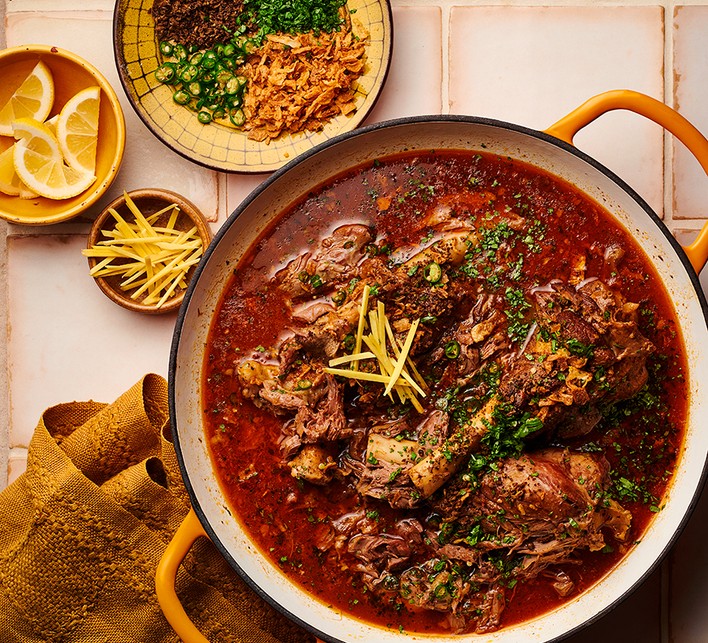
Nihari
- Sumayya Usmani
Save recipe
Serves 6
Easy
Prep: 20 mins
Cook: 3 hrs - 4 hrs
A star rating of 4.5 out of 5.4 ratingsRate
loading...
Enjoy this slow-cooked spiced lamb stew from Pakistan. It's particularly popular during Ramadan and is a staple at weddings and celebrations
Egg-free
High-protein
Low sugar
Nut-free
Ad
Skip to ingredients
Alternatives
Complete the dish
Loading...
Showing items 1 to 3 of 3

Naan bread
A star rating of 4.8 out of 5.407 ratings

Easy pilau rice
A star rating of 4.6 out of 5.94 ratings

Chicken karahi
A star rating of 3.5 out of 5.8 ratings
Nihari is considered the national dish of Pakistan, representing the confluence of migration, integration, and evolution of regional flavours. Nihari originates from the word "nihar" meaning morning in Arabic/Urdu, as it was traditionally eaten at dawn. The dish emerged in the late 18th century in the Mughal empire. Originally, nihari was a breakfast dish for Nawabs (nobility), prepared overnight and simmered for hours in large pots. Working-class labourers would eat it in the early morning for sustained energy throughout the day, particularly during cold winters.
After the partition of India in 1947, the dish evolved in different Pakistani regions – the Karachi style became spicier, Lahori version often includes more marrow, Hyderabad's version uses extra spices and Peshawar adapted it with different meat cuts. It's particularly popular during Ramadan for Sehri (pre-dawn meal) and is a staple at Pakistani weddings and celebrations. Traditional Nihari shops still cook the dish overnight in large handis (pots), often selling out by mid-morning.
Ingredients
Nutrition
Units:
MetricUS
-
4 tbsp vegetable oil
-
2 tbsp ghee
-
2.5cm piece of ginger
finely grated
-
2-3 garlic cloves
finely chopped
-
4 lamb shanks
-
1½ tbsp Kashmiri red chilli powder
-
1 tbsp plain flour
-
1 tbsp wholewheat flour
For the nihari masala
-
1 tbsp fennel seeds
-
1 cinnamon stick
-
2 black cardamom pods
-
2 whole star anise
-
1½ tbsp coriander seeds
-
1 tbsp cumin seeds
-
2 mace blades
or ½ tsp ground mace
-
½ tsp ground nutmeg
-
2 tbsp blue poppy seeds
(not black)
-
15 whole cloves
-
¾ tbsp black peppercorns
or 2-3 pippali long peppers
To serve
-
large handful of coriander leaves
roughly chopped
-
5cm piece of ginger
julienned
-
2 green finger chillies
finely chopped
-
6 tbsp crispy fried onions
-
4 lemons
cut into wedges
-
naan
Keep the screen awake with cook mode on the Good Food app.
Nutrition: Per serving
- kcal552
- fat36g
- saturates12g
- carbs4g
- sugars0.4g
- fibre3g
- protein50g
- salt1.35g
Ad
Method
-
step 1
In a spice grinder or mini food processor, add all the nihari masala ingredients with 2 tbsp hot water and blitz to a fine paste. Set aside 3 tsp of the nihari masala spice blend for serving.
-
step 2
Heat the oil and ghee in a large, heavy-based pan over medium heat. Fry the ginger and garlic until fragrant, around 2 mins. Add the lamb and fry all over for 10 mins or until well browned. Stir in the Kashmiri red chilli powder, the remaining nihari masala and 1 tsp salt. Fry until spices are fragrant, 1-2 mins, adding a splash of water if needed to prevent sticking. Add 1.5 litres of water, or just enough to submerge the meat.
-
step 3
Bring to a simmer, then cook, covered, over a medium-low heat for 45 mins-1 hr. Remove 150ml of the cooking liquid and whisk with both flours until combined. Return to pan and stir well. Cover and cook on a low heat for a further 2 hrs, or until the meat is fall-apart tender.
-
step 4
Serve garnished with coriander, ginger, chillies, fried onions, lemon wedges, and the reserved spice blend, and naan on the side, if you like.
Recipe tip
The stew is typically served with naan, kulcha (leavened bread), or roti (flatbread) to mop up the juices. Garnishes are served separately for each person to customise.
Ad
Comments, questions and tips
Rate this recipe
What is your star rating out of 5?1 star out of 52 stars out of 53 stars out of 54 stars out of 55 stars out of 5
Choose the type of message you'd like to post
Choose the type of message you'd like to post
CommentQuestionTip
Overall rating
A star rating of 4.5 out of 5.4 ratings
Ad
Ad

Get 3 months of Good Food All Access
Get 3 months of Good Food All Access for just £6. Find triple-tested recipes that take the stress out of deciding what to cook, spend less time planning, and more time enjoying the season.
Loading...
Ad
Loading...
Loading...