- Home
- News & Trends
- Staub vs Le Creuset: which cast-iron casserole is best for you?
❚ We’ve picked products we think you’ll love and may earn commission from links on this page. Read about why you can trust Good Food reviews.
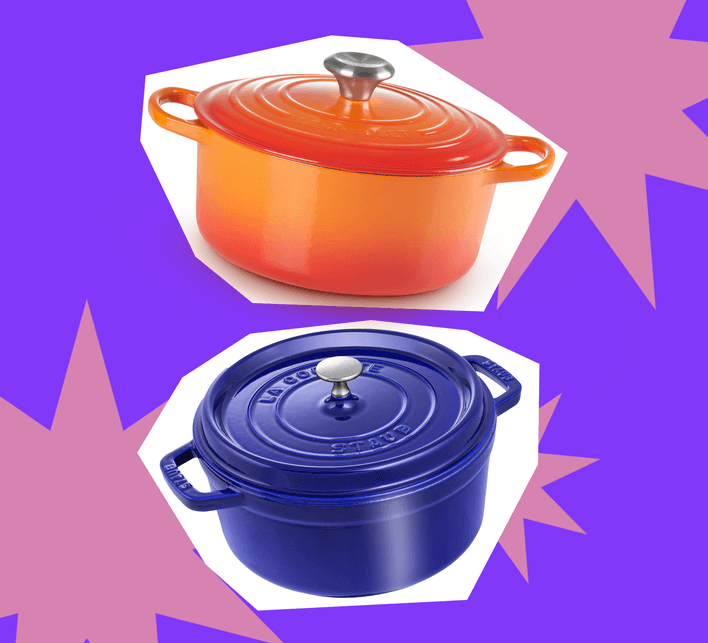
Staub vs Le Creuset: which cast-iron casserole is best for you?
- Gabrielle Sander - food writer and reviews expert
Published: November 24, 2026 at 2:42 PM
loading...
Try the Good Food app - subscribe today
Staub and Le Creuset are two of the most recognisable names in cast-iron cookware, regularly topping recommendations for the best casserole dishes. Both come with a rich heritage, premium price tags and top marks in Good Food tests. But if you could choose only one, which is the best?
Search for the best cast-iron casserole dishes and two names regularly appear near the top: Le Creuset and Staub. Both are French brands known for beautifully made, hard-wearing cookware, distinctive enamelled finishes and premium price tags. Their casserole dishes look remarkably similar at first glance, but there are some important differences.
Ad
Le Creuset is the older and arguably more recognisable of the two. In the UK, it's the brand many of us grew up seeing in our parents' or grandparents' kitchens: the treasured casserole dish, carefully carried (or rather hefted) from hob to oven to table. It's also become something of a kitchen status symbol, with collectable colours, limited editions and a loyal following. On social media and in magazines, it’s featured in all manner of celebrity kitchens, from Stanley Tucci to Snoop Dogg.
Staub has a slightly different reputation, with strong associations with professional chefs and serious home cooks. Its collaboration with legendary French chef Paul Bocuse helped establish its credentials, while signature details such as the self-basting spikes beneath the lid give its cookware a distinctive identity.
Here at Good Food, through our rigorous, multi-faceted testing process, using our triple-tested recipes and everyday scenarios, we can confidently say that when it comes down to the fine detail and performance, Le Creuset and Staub are equally superb. We’ve tested one casserole dish from each brand and they both scored 5/5, with excellent cooking results, build quality and design.
So, when it comes to performance, there's very little between them. But look more closely at their features, sizes, prices and finishes, and there are some useful differences to consider.
If you’re genuinely asking yourself the question: Staub vs Le Creuset?, then this Good Food guide has everything you need to help you choose.
Jump to section:
- Main differences at a glance
- Staub vs Le Creuset cast-iron casseroles compared
- Can you put Le Creuset in the dishwasher?
- Is Staub better than Le Creuset?
- Other casserole dishes to consider
- How we test casserole dishes
Staub vs Le Creuset cast-iron casseroles: main differences at a glance
Le Creuset
Le Creuset was founded in 1925 by Armand Desaegher and Octave Aubecq, who hand-cast and enamelled the first Le Creuset casserole dish in their foundry in Fresnoy-le-Grand, northern France. Inspired by the rich hue of the molten iron, the duo chose the now iconic Volcanic orange for the exterior of that first cooking pot, which remains the brand’s signature piece over a century later.
While cast-iron casserole pots had been produced for centuries before, Le Creuset helped pioneer the use of colour in enamel cookware and paved the way for the array of colourful iterations on the market today.
Le Creuset's cast-iron casseroles are still made at the original French foundry. The classic design has evolved over the past century, with refinements to its handles, finishes and performance, while retaining the craftsmanship and distinctive character of the original.
Le Creuset’s signature Volcanic is now one of around 15 permanent primary and pastel-coloured tones. The classic round casserole shape has also expanded to include oval and shallow pans and dishes, as well as playful seasonal collections, in a variety of sizes. In addition to the core cast-iron collection, there are colour-matched subcategories to fulfil almost every pot, pan, tray, small appliance or kitchen accessory need you could possibly have.
Here at Good Food, we have tested a variety of casserole dishes and can reliably confirm that Le Creuset’s is one of the very best:
Le Creuset Cast Iron Round Casserole (28cm)
Available from Le Creuset (from £229), John Lewis (from £265)

Star rating: 5/5
Aside from the substantial price tag, we couldn’t find fault with Le Creuset’s signature casserole dish. Lifted out of its cardboard packaging, it has the wow factor of a true investment piece and feels built to last as long as the lifetime guarantee.
Every element of the 28-cm Le Creuset we tried felt carefully thought out and engineered for ease of use. At 6.13kg in its empty state, it’s a beast to carry about the kitchen, yet the big comfortable handles enable you to do so with relative ease. The knob on the top, so prevalent with casserole pots, had slightly softer edges and a more ergonomic size and shape compared to all the others we tested.
In the recipe tests, we were impressed with its heat-retaining qualities, keeping food piping hot even once out of the oven, and the close-fitting lid, which kept moisture in. The finished results of our slow-cooked one-pot were tender and flavoursome, and at the end of the meal, the dish was easy to clean.
The ease of use, foolproof, impressive cooking results, and variety of sizes make the Le Creuset an excellent investment piece for beginner cooks and experts alike, and households big or small.
Available from:
Staub
Staub was founded in 1974, with the first dish brought to life in a former artillery factory in the Alsace region of France and launched in 1978. Drawing on the area’s rich culinary history and tradition for one-pot slow cooking, Francis Staub set out to evolve the traditional casserole dish, or “cocotte”, by making use of more modern materials and techniques and design tweaks.
Staub worked in close collaboration with legendary French chef Paul Bocuse, who helped develop its signature features such as the self-basting spikes in the underside of the lid. Bocuse became a lifelong ambassador for the brand, using Staub both at home and in his three Michelin-starred kitchen. Staub continues to have a dedicated chef following today, with James Beard Award-winners Tom Sellers and Dan Kluger endorsing its casserole pots.
Staub was acquired by the German culinary group, Zwilling J.A. Henckels in 2008. It remains a French-made brand, with its cocottes retaining many of the distinctive features that established its reputation, including the matte black enamel interior and self-basting lid.
If it’s a Staub you’re after, we recommend this Good Food 5/5-star-rated one:
Staub Cast-Iron Cocotte
Available from Staub (£309), John Lewis (£309), Amazon (£193.22)

Star rating: 5/5
The Staub Cocotte immediately won us over in the test kitchen with its delicious looks. We liked the compact but perfectly formed design that felt built to last. The internal satin matte black enamel cooking surface contrasted beautifully with the glossy enamel outside. It heated up quickly and cooked evenly, and with the awareness that cast-iron enamel builds up a natural patina with use and gets even better over time, we forgave the initial sticking we experienced when searing our chicken thighs.
With the pot’s high sides, the casserole simmered well on the hob without overspill, and when it came to the oven, the lid sat tight and retained the moisture, and the wide handles made it easy to carry about. The Staub is suitable for cooking on all hobs, including induction, steel plate and even a BBQ, and the easy-to-grip brass knob on the lid is oven-safe up to 250C.
Available from:
Staub vs Le Creuset cast-iron casseroles compared
We tested cast-iron casseroles against the following criteria:
- Overall quality of materials
- Ease of use
- Cooking results
- Versatility
- Sustainability
- Value for money
From their respective reviews, you can see how well the individual products performed in each area. Here are a few other factors to consider before deciding on the right cast-iron casserole for you.
Size and weight:
Both brands offer a wide choice of sizes, from small individual casseroles to substantial family-sized pots. When choosing, consider not only how many people you usually cook for, but also the weight of the dish, its capacity and whether it will fit comfortably in your oven and storage space.
These are heavy pieces of cookware, even before they're filled. Staub's thicker cast-iron construction can also make some similarly-sized models heavier than their Le Creuset counterparts. For example, the 20cm Staub is 300g heavier and holds 200ml less than the Le Creuset. Check the individual specifications carefully, as capacity and weight vary between sizes.
The Le Creuset Cast Iron Round Casserole comes in eight sizes from 18cm to 34cm. The smallest weighs 2.6kg, with a 1.8L capacity that would suit individuals and couples (though we’d recommend the next one up for long-term versatility and leftovers). The 28-cm version we tested has a comfortable simmering depth of 12cm and a 6.7-litre capacity, which would easily feed a large hungry family. At just over 6kg it is a substantial weight even in its empty state, however the generous rounded handles made it comfortable to carry. To help choose the right one for your needs, Le Creuset has this handy size guide.
The Staub Cast-Iron Cocotte comes in 11 different sizes, ranging from 10cm to 34cm, though the smallest are only suitable for individual and small bakes. For smaller households, batch cookers or big families, this pot comes in a variety of sizes up to 34cm.
Design and colours:
At first glance, the two brands have a similar glossy enamelled finish, but there are some noticeable differences. Staub has a signature matte black interior, with self-basting spikes beneath the lid to help redistribute condensation during cooking. The dark finish is good at disguising staining, although it can make it harder to see when food is catching.
Inside, Le Creuset tells a different story: its traditional light-coloured interior makes it easier to monitor browning and cooking, although marks can become more visible over time. There are small bumps on the underside of the lid that also retain moisture. The handles and lid knob are softer all round. Over time, that crisp colour might take on more obvious stains, but it shouldn’t affect the cooking performance or flavour.
Both brands offer a wide choice of permanent colours, alongside seasonal shades, limited editions and collaborations. Le Creuset’s Cast Iron Round Casserole currently comes in 14 main colourways, while Staub’s Cast Iron Cocotte comes in 10.
To personalise your dish, Staub has a playful stainless steel selection including a rabbit and snail. At Le Creuset, you can choose from a wide variety of finishes and shapes.
Durability:
A big appeal of Staub and Le Creuset is their durability, and these solid, well-made cast-iron casseroles are built to stand up to repeated use, with a high oven heat resistance (Le Creuset: up to 260C / Staub: up to 250C or 260C without the lid). They’re suitable for all standard hob types, including induction, and the Staub can also be used on an outdoor BBQ grill.
The glossy enamelled exterior coating is durable, but not indestructible: it can chip if it’s knocked against a hard surface and would be severely damaged if dropped. The smooth enamelled interior is designed to be scratch-resistant; however, it can still be marked without proper care. While Le Creuset says you can use metal utensils with care, non-metallic or silicone is recommended.
Both brands are covered by a warranty against manufacturing defects: Le Creuset states that it covers the lifetime of the original owner, whereas Zwilling offers a 30-year guarantee. Any dulling of the enamel, scratching or corrosion is considered normal wear and tear.
Price:
With proper care, a good enamelled cast-iron casserole can last for decades and potentially be passed down through generations. It’s partly what makes them so expensive, and if you can stretch the budget to buy one for yourself or gift one to a lucky loved one, it’s a worthwhile spend.
Le Creuset’s casserole pot costs from £229 (18cm/1.8l) to £529 (34cm/12l). Staub cocottes range from £219 (18cm/1.7l) to £499 (34cm/12.6l)
Can you put Le Creuset in the dishwasher?
In short, yes. According to the brand’s care advice, most Le Creuset enamelled cast-iron casserole dishes are dishwasher-safe, although they recommend handwashing to preserve the finish, as repeated dishwasher use can cause the enamel to become dull over time. Some lid knobs and finishes are not suitable for the dishwasher, so it’s vital to check the specific guidance.
In our testing, we found the casserole easy to clean by hand, even after braising and slow cooking. For everyday care, we'd recommend washing it in warm, soapy water once it has cooled. If stubborn stains do appear on the enamel, Le Creuset recommends using enamelled cast-iron cookware cleaner.

Is Staub better than Le Creuset?
The Staub and Le Creuset we tested are both exceptional cast-iron casseroles, and we found little to separate them in terms of cooking performance, build quality and ease of use. Both earned a Good Food 5/5 rating, so the decision comes down to personal preference and budget.
Staub is worth considering if you prefer a more understated look, a matte black cooking surface and the distinctive self-basting lid. Its range of smaller cocottes also makes it appealing for individuals and smaller households. It can be slightly more affordable, too, depending on the size.
Le Creuset is the natural choice if you love colourful cookware, want a broader choice of finishes and appreciate its instantly recognisable design. Its generous handles and light-coloured interior are also practical advantages.
Ultimately, you won't go far wrong with either. These are premium pieces of cookware that performed exceptionally well in our tests, and the best choice is the one that suits your cooking habits, kitchen and budget.
Other casserole dishes to consider
There are plenty of alternatives inspired by the classic Le Creuset and Staub designs, without the high-end price tag. Here are some we’ve put to the test that come highly recommended by Good Food:
- The M&S x Tom Kerridge 3 Piece Cast Iron Stacking Set (£105) was among our 2026 star buys, offering the versatility of three pots in one, including a large casserole, at great value.
- The 5.2L Made In Enamelled Cast Iron Round Dutch Oven (£219) combines impressive cooking results with stylish modern looks and scored 5/5.
- At a glance, the £75 ProCook could easily be mistaken for a Staub, and with a 6.2l capacity it’s a great option for family feasts.
For more choice, across a broad range of budgets, take a look at the Good Food guide to the best casserole dishes.
How we test casserole dishes
We’ve tested around 25 casserole dishes in the Good Food Test Kitchen, from budget-friendly options to premium investment pieces.
Each was assessed using Good Food’s triple-tested beef and vegetable casserole recipe, which involves multiple stages including browning meat and vegetables, braising and slow cooking, and moving from hob to oven.
We used the same recipe and process to test the Le Creuset and Staub casseroles, to give us an accurate picture of how each one performed across different heat levels and techniques. We also assessed ease of use, capacity, versatility, build quality, durability, design and value for money.
Ad
Related reviews
Best casserole dishes
Best hand blenders
Best induction pans
Best ceramic pans
Best kettles
Best pestle and mortars
Best toasters
Best mixing bowls
Best dishwashers
5/5 kitchen appliances for autumn
Best paella pans
Best oven thermometers
Comments, questions and tips
Choose the type of message you'd like to post
Choose the type of message you'd like to post
CommentQuestionTip
Ad
Ad
Loading...

Get 3 months of Good Food All Access
Get 3 months of Good Food All Access for just £6. Find triple-tested recipes that take the stress out of deciding what to cook, spend less time planning, and more time enjoying the season.
Ad
Loading...